
Shy Bowel and Shy Bladder Program
What is the Shy Bowel and Shy Bladder Program?
Regain Confidence and Freedom in Everyday Life
If using public or shared restrooms feels difficult, stressful, or limiting, you are not alone. Shy bladder (paruresis) and shy bowel (parcopresis) are common difficulties where anxiety and fear of being noticed or judged can make urination or bowel movements difficult, even when the body is physically capable.
This free, evidence-informed program is designed to help you understand these difficulties and take practical, step-by-step action to build confidence, flexibility, and independence.
This free program is organised as a short, self-guided introduction to understanding and managing restroom anxiety. It explains why shy bladder and shy bowel can develop, introduces practical anxiety-management and behavioural strategies, and guides you through gradual exposure exercises that can be adapted to your own goals and circumstances.
This program is not a replacement for medical and allied health support:
This free online program provides general education and self-help support only. It does not replace medical, psychological, physiotherapy, or other allied health care. If you have bladder, bowel, mental health, or other health concerns, or if you are unsure whether the program is suitable for you, please speak with your medical practitioner or allied health team before using it.
How the Program Helps
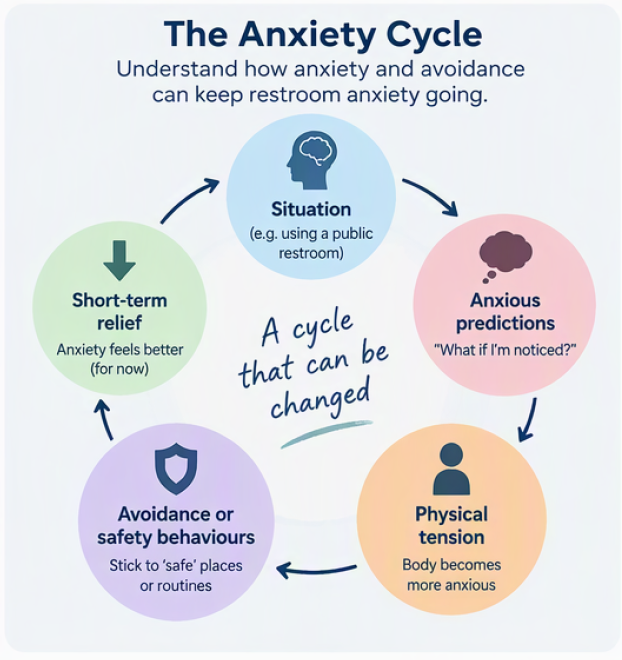
This program targets the core patterns that keep restroom anxiety going, including:
- Fear of scrutiny and embarrassment
- Avoidance of certain situations
- Reliance on “safe” restrooms or routines
- Self-monitoring, checking, and tension
- Unhelpful thoughts and predictions
By working on these processes directly, you can learn to respond differently to anxiety, reduce avoidance, and use restrooms more freely across a wider range of situations.
A Practical, Transdiagnostic Approach
Rather than focusing only on diagnostic labels, this program uses a transdiagnostic approach. This means it targets the shared patterns that can maintain both shy bladder and shy bowel, such as anxiety, avoidance, self-monitoring, safety behaviours, and unhelpful predictions.
It combines:
- Cognitive behavioural strategies
- Exposure-based practice
- Acceptance and attentional skills
- Practical behavioural techniques
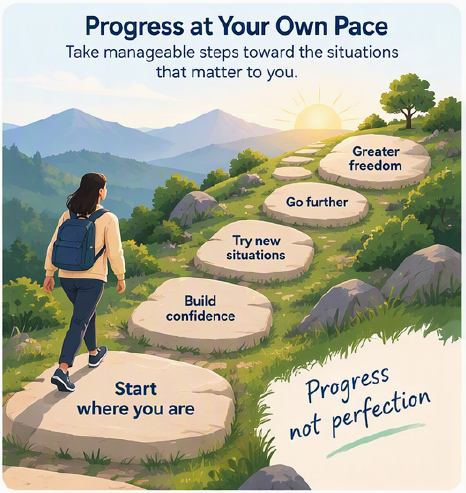
The program is flexible and self-guided, allowing you to move at your own pace and tailor strategies to your specific experiences and goals.
Program Structure and Time Commitment
What You’ll Learn
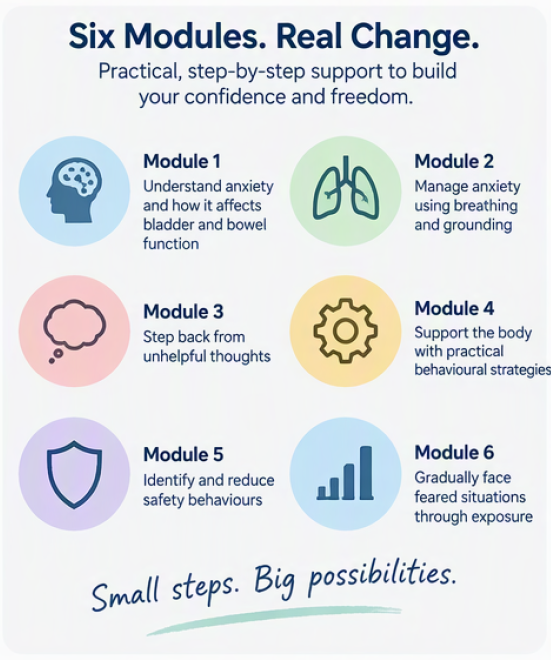
Across six short modules, you will build practical skills to:
At the core of the program is graded exposure. This approach involves taking planned, manageable steps toward restroom situations that you may usually avoid, helping your brain and body learn that these situations can become safer and more manageable over time.
What You Can Expect
A Supportive Starting Point
This program is designed to complement professional care. If you have ongoing or concerning bladder or bowel symptoms, seek advice from a medical or allied health professional before starting.
Recommended Resources
These following organisations provide trusted information, support groups, and structured programs to help people improve confidence with restroom use.
- International Paruresis Association (IPA)
The leading global organisation for shy bladder support. The IPA provides education, support groups, workshops, and practical guidance based on graded exposure approaches.
> International Paruresis Association
- UK Paruresis Trust (UKPT)
Offers education, workshops, and peer support for people experiencing shy bladder. Includes forums and lived-experience stories to reduce isolation.
> UK Paruresis Trust
- Paruresis Association of Australia (PAA)
Provides local support options, including community groups and information for Australians experiencing shy bladder.
> Paruresis Association of Australia
These organisations emphasise that shy bladder is a common and treatable condition and offer structured support to help people gradually regain confidence.
Please note: If you have bladder, bowel, mental health, or other health concerns, or if you are unsure whether this program is suitable for you, please speak with your medical practitioner or allied health team before using it. This is especially important if you have new, worsening, or unexplained symptoms, or if you are currently receiving care for a related physical or mental health condition.
How to access the free program?
The program will be available at the end of November 2026.